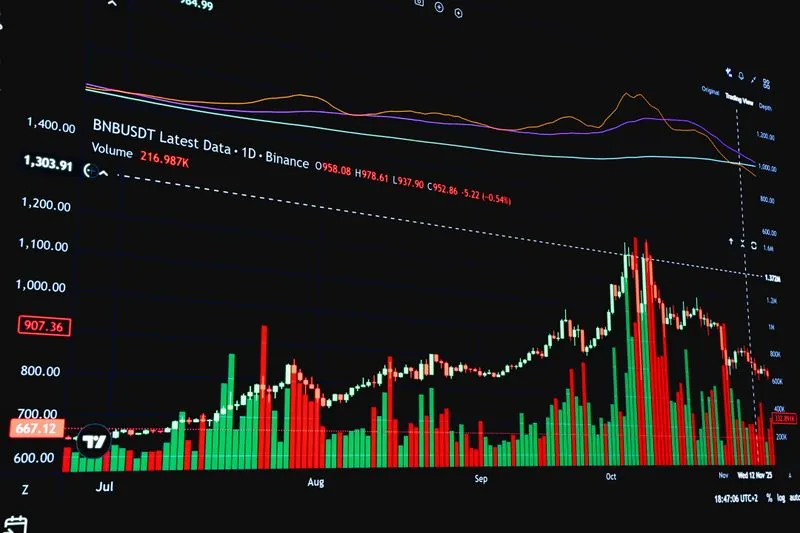
Bitcoin started the last week of August below $78,000, and the reason is not crypto-specific. It is macro. Fed Chair Kevin Warsh used his Jackson Hole speech on August 28 to push back on the idea that summer disinflation means the job is done, and markets repriced September rate-hike odds from roughly 40% to about 60% in a single weekend. Bitcoin, which had been trading near $80,000 during the day on the 28th, broke below $78,000 in the early hours of the 29th and is now hovering in the $77,000 range.
Here’s the short version: when rate hike expectations rise, non-yielding assets lose relative appeal. Bitcoin does not pay interest, so its competition is not other cryptos, it is the yield on a three-month Treasury bill. That logic, not any protocol issue, is what is driving this pullback.
What actually happened
The selling began late on August 28, after Warsh’s speech at the Jackson Hole Economic Symposium. He described the 2% PCE inflation target as a “fixed target” and argued that one soft month is not proof of a sustainable return to price stability. He pointed to the six-month annualized PCE rate, which is running around 4.1%, as the more honest signal.
Markets got the message quickly. Rate futures moved from roughly 40% implied probability of a September hike to around 60%. On Bitstamp, bitcoin fell as low as $78,442 before dip-buying lifted it back toward $79,000. By the early hours of August 31, sellers had regained control and pushed it back to the $77,000 level. Ethereum was down about 1.7% and XRP fell 2.8% over the same stretch, so this was a broad market move, not a bitcoin-specific event.
Trading volume tells the same story. Bitcoin’s 24-hour volume came in near $14.9 billion, which is not a thin-liquidity crash. This is an asset being repriced on macro expectations with real participation behind it.
Why the Fed speech matters for crypto
Bitcoin’s relationship with interest rates is not complicated, even if the chart makes it look that way. When the Fed hikes, the dollar strengthens, real yields rise, and risk assets that produce no cash flow take the hit first. That is the textbook mechanism, and it is exactly what played out over the weekend.
The Federal Reserve’s policy statements and the September 15-16 FOMC meeting are now the key dates on the calendar. If economic data in the meantime softens, hike odds could fall just as quickly as they rose. If the data stays firm, the pressure stays on.
One detail worth noting: the Fear & Greed Index is still at 69, which is “greed” territory. Investors have not turned defensive. That is consistent with a sentiment-driven correction rather than a structural sell-off.
What this means for your portfolio
If you are a long-term investor, this is the kind of move you plan for, not react to. A macro-driven 3% to 4% pullback is normal noise. The dollar-cost averaging approach we have covered before exists precisely for weeks like this: buy on schedule, not on impulse.
Three things worth doing now:
- Check your position size. If bitcoin is more than a small slice of your portfolio, a rate-driven drawdown will feel worse than it is.
- Watch the September FOMC meeting. That is the next real catalyst, and the outcome will set the tone for the rest of the quarter.
- Ignore the price predictions. Nobody knows where rates land, and anyone who tells you they do is guessing.
The same market structure that drove the August ETF inflows is still in place. Institutional flows slowed this week, but the products remain. If you want to understand the asset itself rather than the noise, our plain-English explainer on Bitcoin is a better use of ten minutes than watching the ticker.
What to watch next
The calendar between now and the FOMC meeting matters more than any single price level:
- The U.S. jobs report this week will move rate expectations either way.
- PCE data will be read through Warsh’s six-month lens, not the one-month number.
- Oil and the dollar remain the background forces. When the yen breaks 160 and the dollar strengthens, crypto feels it.
The bottom line is simple: bitcoin is not broken, the market structure is not broken, and the pullback is explainable. Rate expectations shifted, and the price adjusted. That is how markets work. If you have a plan, this week does not change it.
Frequently asked questions
Why is bitcoin falling when there is no bad crypto news? Because this is a macro move. Fed Chair Warsh’s hawkish Jackson Hole speech raised September rate-hike odds from about 40% to 60%, and non-yielding assets like bitcoin lose appeal when rate expectations rise.
Is this a crash or a correction? A correction. Bitcoin is down roughly 3-4% from its recent high, trading near $77,000-78,000. Trading volume is healthy and the Fear & Greed Index is still in greed territory at 69.
What could reverse the move? Softer economic data before the September 15-16 FOMC meeting. If jobs or inflation numbers come in weak, rate-hike odds could fall just as quickly as they rose.
Should I sell my bitcoin? That depends on your plan, not the price. If you are investing on a schedule, a 3-4% macro-driven pullback is not a signal to change it. Position sizing and time horizon matter more than this week’s headlines.