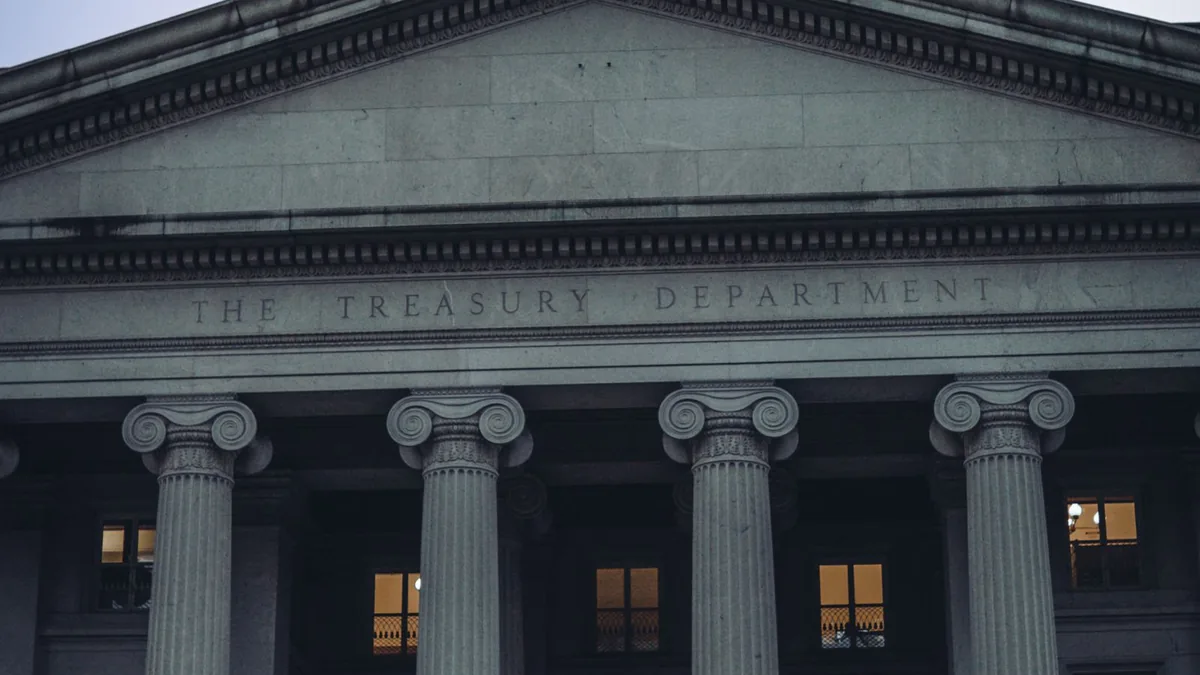
The U.S. Treasury is quietly becoming one of the biggest buyers of its own long-term debt. Starting September 9, it will at least double the size of its buyback operations for 10- to 30-year bonds, pushing each operation to a minimum of $4 billion. The announcement, made on August 19, came after the 30-year yield hit a 19-year high. Within hours, long-term yields dropped sharply.
Here’s the short version: the Treasury is stepping in to support a part of the bond market that has been selling off hard since June. That support has spillover effects beyond bonds; it helped fuel Bitcoin’s rally in August, and it frames the debate around what the Federal Reserve does at its September 15-16 meeting.
What the Treasury actually announced
The Treasury runs “liquidity support buybacks” in two sectors: 10- to 20-year notes and 20- to 30-year bonds. These are not the same as the Fed’s quantitative easing; the Treasury is buying its own debt to smooth out liquidity, not to inject money into the economy. But the effect on prices can look similar.
According to the Treasury’s press release, the maximum size of these operations will at least double, to $4 billion or more per operation, effective September 9 through November 4. The department says it wants to provide “greater liquidity support in longer-dated nominal sectors” where demand from market participants has been strong.
The timing was not accidental. The announcement landed the same week U.S. government debt crossed $40 trillion for the first time, $40.05 trillion, to be precise, about four and a half years after passing $30 trillion.
Why long-term yields were climbing
The sell-off in long-dated Treasurys began in June, and it had three engines. The budget deficit keeps widening. Inflation is running above the Fed’s 2% target. And a wave of corporate debt issuance is competing with government bonds for the same buyers.
The 30-year yield climbed to its highest level in 19 years in the week before the announcement. That is a big deal for anyone with a mortgage, a pension, or a savings account, because the long end of the curve sets the tone for borrowing costs across the economy.
Markets read the Treasury’s move as a signal of unease. ING strategists wrote that the intervention “smacks of discomfort” about long-term borrowing costs and raised the possibility the administration could do it “again and again.” Deutsche Bank’s George Saravelos called it a “soft-form” financial repression; a policy that keeps government borrowing costs down at the expense of savers. Those are strong words, but they capture why this matters: the government is now an active buyer in the market it also borrows from.
What happened to yields
The initial reaction was exactly what the Treasury wanted. The 10-year yield closed down more than 5 basis points at 4.647%, and the 30-year fell 9 basis points to 5.196% on the day of the announcement, CNBC reported.
The relief did not last. By the next day, the 30-year yield was back near 5.23%. Analysts were quick to note that buybacks can cushion a sell-off, but they do not fix the underlying math of deficits and inflation. The Treasury can influence the price of its bonds. It cannot print its way out of the fiscal picture, and the market knows it.
What it means for Bitcoin
This is where crypto comes in. Bitcoin spent most of August climbing on exactly this kind of macro support, the biggest weekly gain in its history came in late August, with the Treasury’s intervention cited by traders as a key tailwind. When long-term yields fall, the opportunity cost of holding a non-yielding asset like bitcoin drops, and the “debasement” narrative gets louder.
But here is the tension. The same week the Treasury expanded its buybacks, Fed Chair Kevin Warsh signaled the Fed could still raise rates in September, pushing implied odds to about 60%. Those two forces pull in opposite directions: Treasury support is friendly to risk assets, while a rate hike is not. That is why bitcoin fell from the $80,000 area to about $76,600 in early September, down roughly 1.7% in 24 hours as of September 2, according to CoinGecko.
The buyback expansion and the Fed’s decision calendar are now running on the same clock. The new $4 billion operations start September 9. The FOMC meets September 15-16. If the Fed holds or signals patience, the Treasury’s support could re-ignite the risk-on trade. If it hikes, bitcoin has to fight both a stronger dollar and higher real yields.
What it means for your savings
If you hold bonds or bond funds directly, the buybacks are a short-term cushion, not a cure. Yields can keep drifting higher if inflation stays sticky, and that would push bond prices down.
If you hold cash, the picture is more interesting. Short-term Treasury bills and high-yield savings accounts are still paying rates near the Fed’s policy range, that part of your portfolio is fine. The real question is the long end. A government that keeps borrowing $2 trillion a year while buying back its own long bonds is a government asking savers to accept less compensation for inflation risk. That is the “financial repression” argument in one sentence.
The practical takeaway for most people: keep your emergency fund in short-duration, liquid accounts where rates are still decent, and think carefully before locking up money in long bonds at yields that the Treasury itself is trying to push down. For context on how Fed decisions ripple through your money, our guide to Federal Reserve rate decisions walks through the mechanics.
The bottom line on Treasury bond buybacks
The Treasury doubling its long-dated bond buybacks to at least $4 billion per operation is a real policy shift, not a footnote. Starting September 9, the U.S. government becomes a more active buyer of its own 10- to 30-year debt, and markets will watch whether it keeps expanding the program after the November 4 refunding announcement.
For investors, the next two weeks are the tell. Watch the buyback operations, watch the 30-year yield, and watch what the Fed does on September 16. Treasury bond buybacks are back in the picture, and they are now tangled up with the single biggest question in markets: whether the Fed hikes again.